Backend Infrastructure for a Team-Based Volunteer Management Platform
VolunteerHub
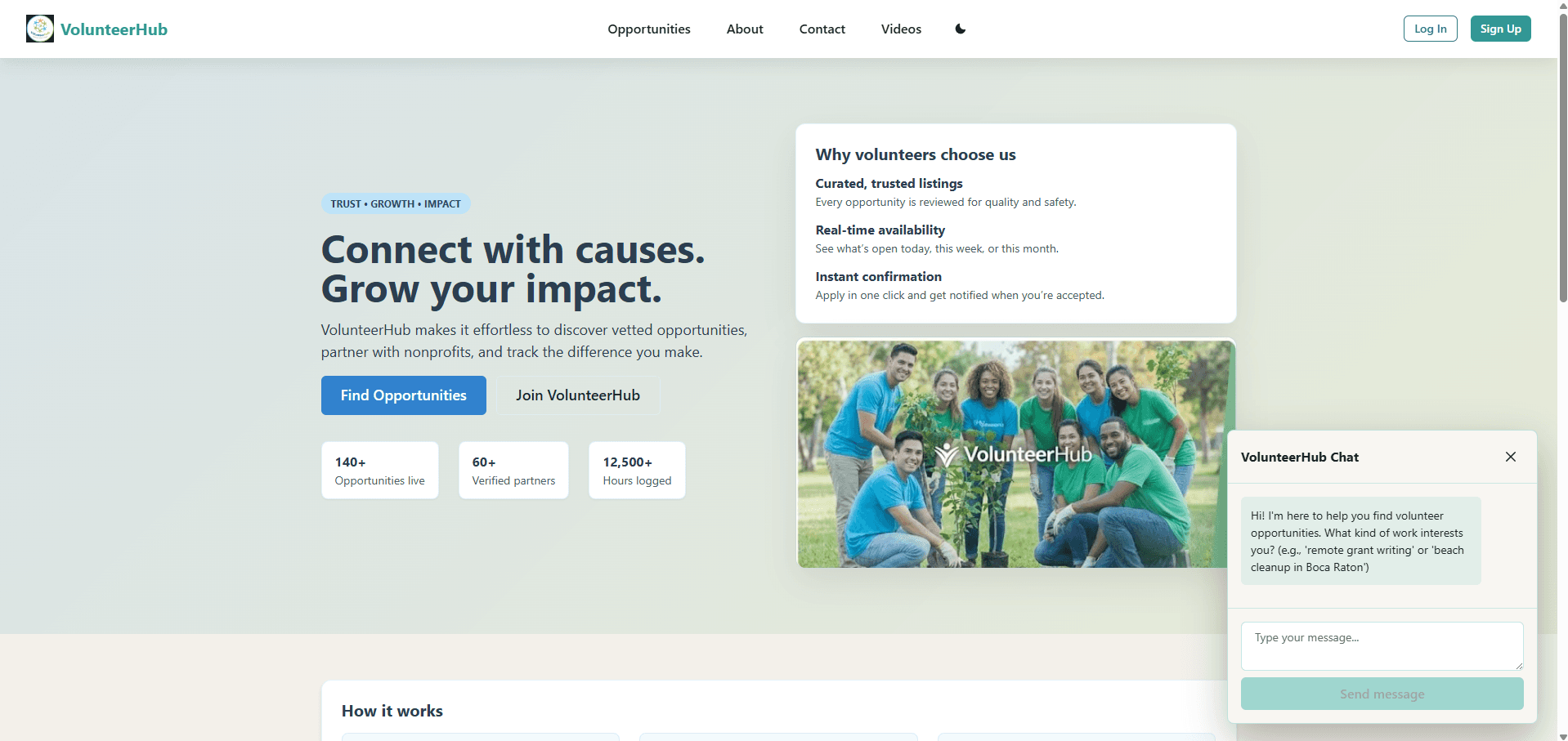
VolunteerHub is a collaborative full-stack volunteer management platform developed by a team of software engineering students. My primary responsibility was designing and implementing the backend architecture, including database modeling, REST API development, authentication, and role-based authorization to provide a secure and scalable foundation for the application.
Project Overview
Role
Backend
Architecture
REST API
Authentication
JWT
Project
Team
Engineering Timeline
Project Planning
Collaborated with the team to define project requirements, backend responsibilities, and the overall application architecture.
Backend Architecture
Designed the database schema, established model relationships, and implemented the application's REST API structure.
Security Implementation
Developed JWT authentication, role-based authorization, and secure API endpoints to protect application resources.
Frontend Integration
Worked alongside frontend developers to integrate backend services, validate API functionality, and support application testing.
The Problem
The project aimed to provide volunteer organizations with a centralized platform for managing volunteers, organizations, events, and user accounts. As the backend developer, my objective was to design a secure, maintainable backend capable of supporting the frontend through well-structured REST APIs while enforcing authentication and authorization across the application.
The Solution
I designed and implemented the backend using Flask, SQLAlchemy, SQLite, and JWT authentication. My work included database schema design, REST API development, user authentication, role-based authorization, and supporting frontend integration through clearly defined API endpoints. Throughout development, I collaborated closely with teammates to ensure seamless communication between the frontend and backend components.
System Architecture
Component Details
Authentication
Purpose
Verifies user identity before allowing access to protected resources.
Responsibilities
- ✓ Validate credentials
- ✓ Issue JWT tokens
- ✓ Protect endpoints
Technologies
Why It Exists
Ensures only authenticated users can access secured resources.
Key Features
- RESTful API endpoints
- JWT authentication
- Role-based authorization
- Volunteer management
- Organization management
- Event management
- Relational database modeling
- Secure backend architecture
Technology Stack
Engineering Decisions
Flask
Why I Chose It
Flask provided a lightweight and flexible framework that allowed the backend architecture to remain modular while supporting rapid development throughout the project.
Trade-offs
- Requires more manual configuration than larger frameworks
- Excellent flexibility
- Simple application structure
Used For
- REST API
- Application routing
- Backend services
SQLAlchemy
Why I Chose It
SQLAlchemy simplified database interactions while allowing the project to maintain clean object-oriented models and well-defined relationships.
Trade-offs
- Additional ORM abstraction
- Improved maintainability
- Database portability
Used For
- Database models
- Relationships
- Database queries
JWT Authentication
Why I Chose It
JWT authentication enabled secure stateless authentication for API requests while keeping the backend scalable and independent of server-side sessions.
Trade-offs
- Requires token management
- Highly scalable
- Industry-standard authentication
Used For
- User authentication
- API security
- Session management
Role-Based Authorization
Why I Chose It
Different user roles required different levels of access. Role-based authorization ensured users could only perform actions appropriate for their permissions.
Trade-offs
- Additional authorization logic
- Improved application security
- Easier future expansion
Used For
- Permission management
- Administrative controls
- Secure API endpoints
Challenges
- Designing a normalized relational database schema
- Coordinating backend development within a collaborative team environment
- Implementing secure authentication and authorization
- Maintaining clean API contracts for frontend integration
- Ensuring backend scalability while keeping the codebase maintainable
Lessons Learned
- Clear communication between frontend and backend developers is essential for successful full-stack projects.
- Well-designed database relationships simplify API development and future maintenance.
- Authentication and authorization should be considered early in the design process rather than added later.
- Modular backend architecture significantly improves maintainability as projects grow.
Future Roadmap
- Deploy using PostgreSQL
- Containerize the backend with Docker
- Add automated API testing
- Generate OpenAPI documentation
- Implement email notifications
- Build an administrative analytics dashboard
- Improve logging and monitoring
- Support cloud deployment